Main responsibilities
- Creation of blockouts and balancing gameplay
- Boss enemy design
- Boss puzzle level design
- Planning, Priortization and Sourcing sound effects
- Editing, Implementation and Balancing off sound effects
Temple of Giants is a third-person puzzle-platformer set in Ancient Greece. In this single-player experience, you play as Nysa, a greek demi-goddess with earthbending powers, who tries to save her mother from a monster who invaded and destroyed her mother’s temple.
Temple of giants was awarded the following buas awards:
- Best Art Year 2
- Best Game Year 2 Teacher Pick
- Best Game Year 2 Audience Pick
- Runner up Best Design Year 2
- Runner up Best Audio Year 2
Tools used
Temple of Giants is a student project created during the start of Covid 19 which has been developed semi-remote. To create Temple of Giants I have used the following tools to develop it.





Level design
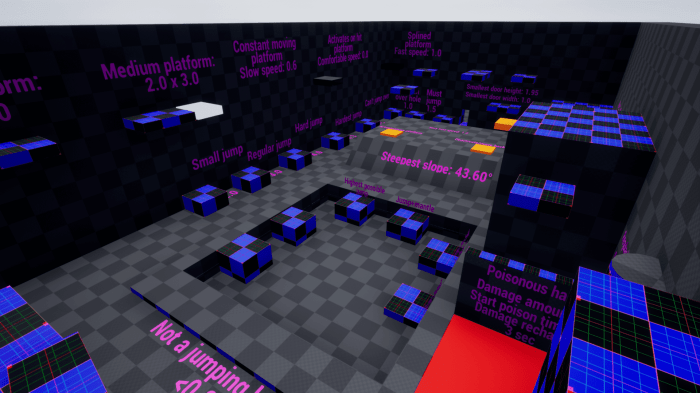
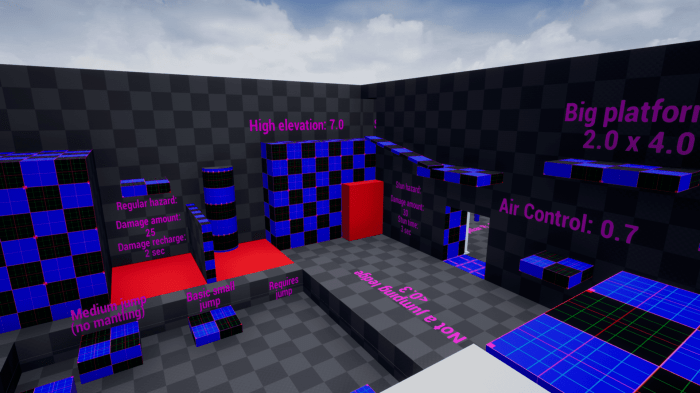
Gym level
I created a gym level to test and establish the metrics I needed to start out with. It contained several obstacles and different shapes to see how characters handled these. Additionally I added in the gameplay features that got added to the game by game design. With these metrics, I was able to determine what the min, max, and comfortable variables were for jumps, hazard speeds, hazard knockback, etc.
Besides having a gym level for level design I also created one for Audio. In this gym level, I would test out different sound cues, sound pitches, and sound speeds. I created this so that I could work on it without having to be reliant on anyone else having to check in their work

Iteration 1
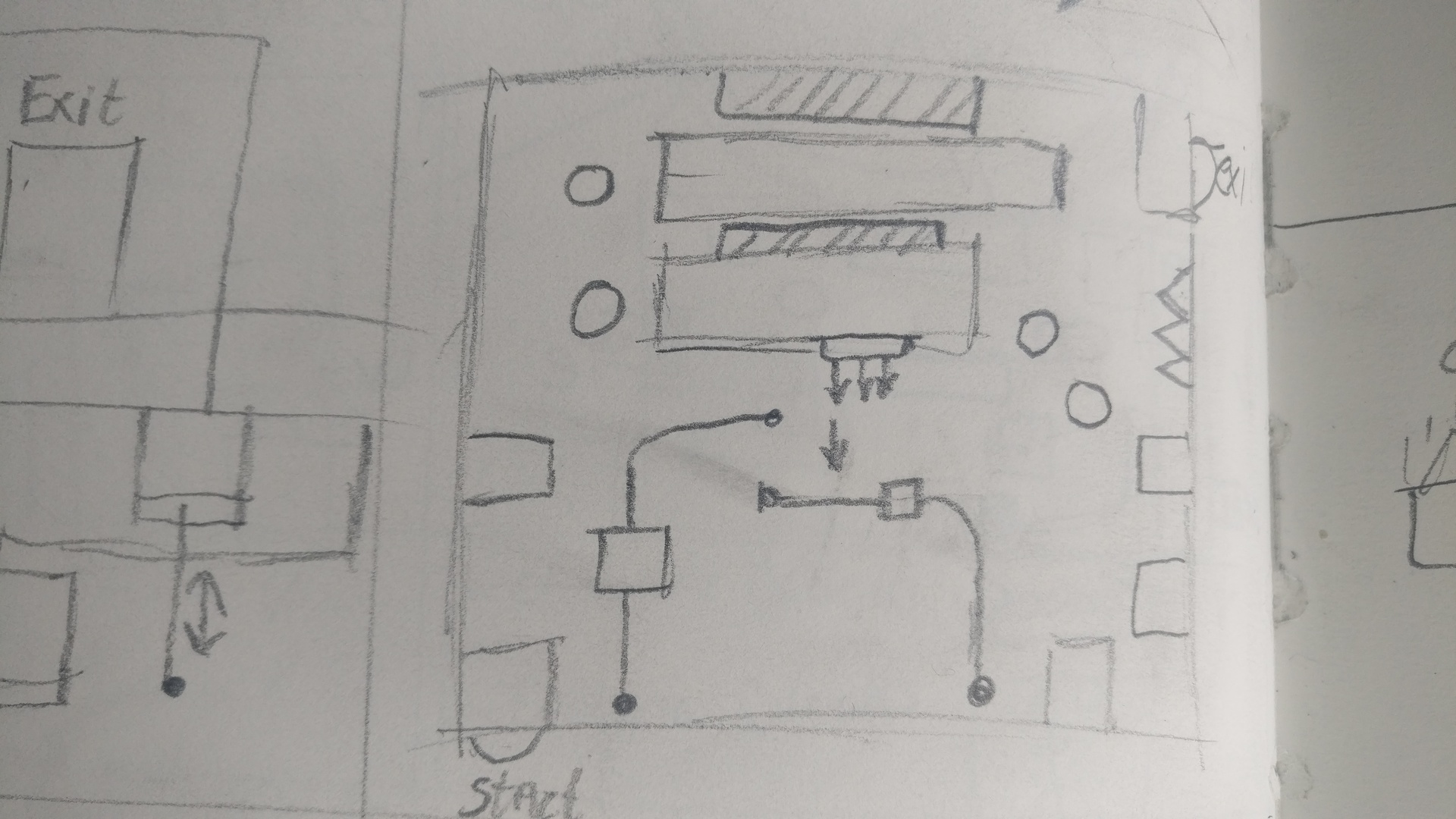
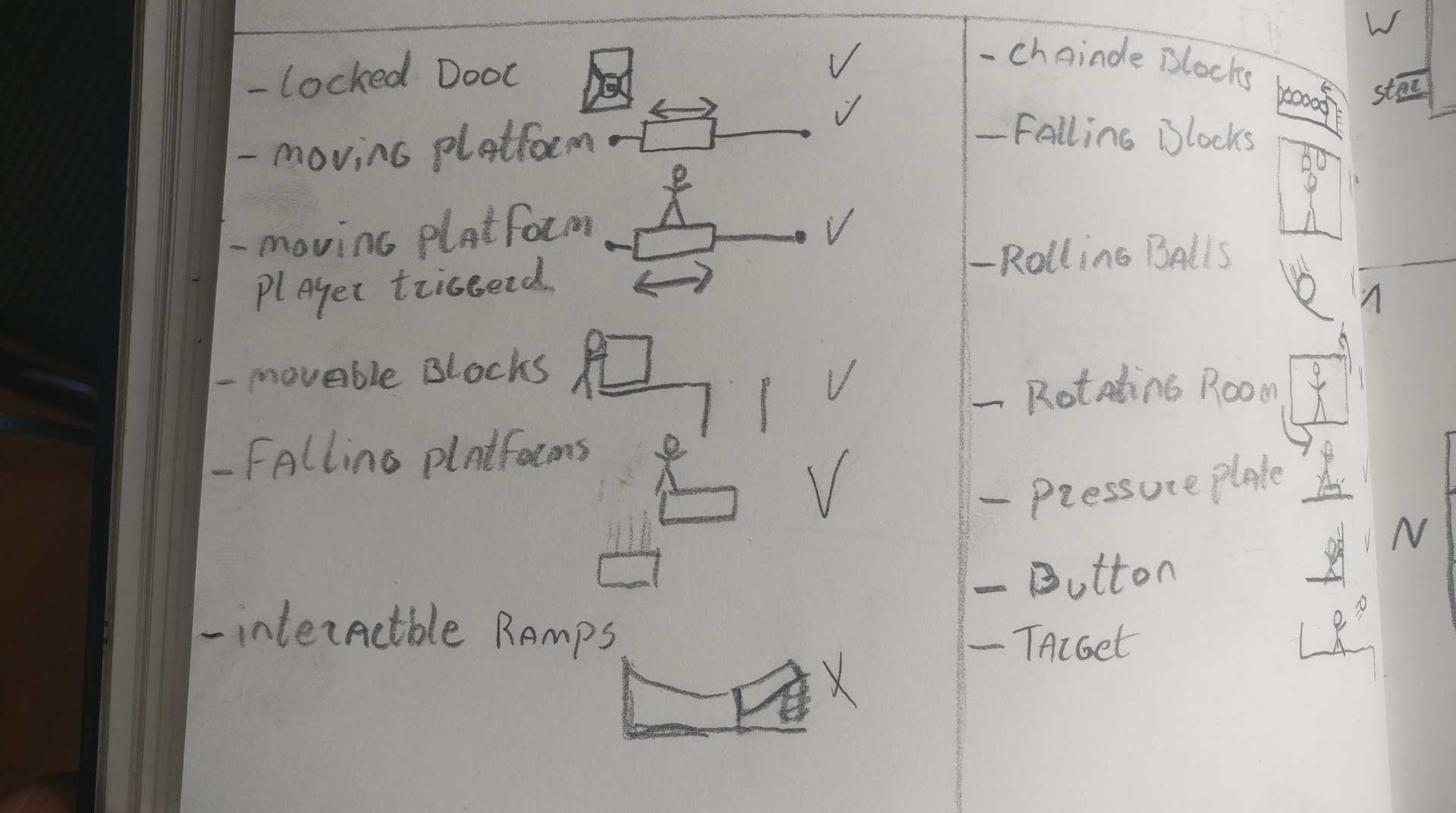
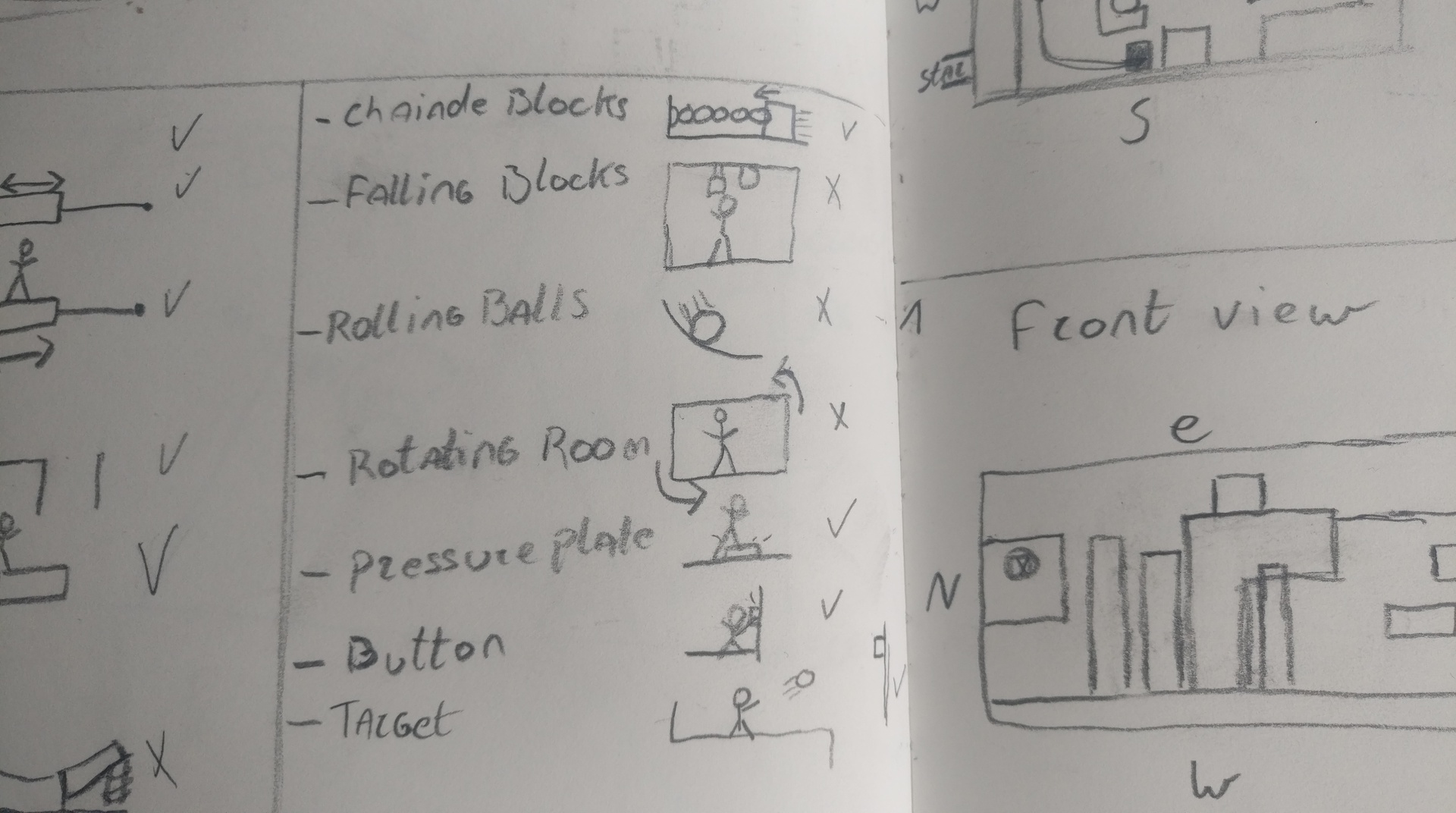
After creating a gym level to test out the basic metrics I need and seeing what features I could use. I started out by sketching moments that could think off. These moments were more platformer-based than puzzle-based at the time. This had to do with the team shifting the vision of the game a bit to more a platformer style with puzzle elements instead of the other way around.
These sketches contained moments as well as possible options that I could do with the features we have available.





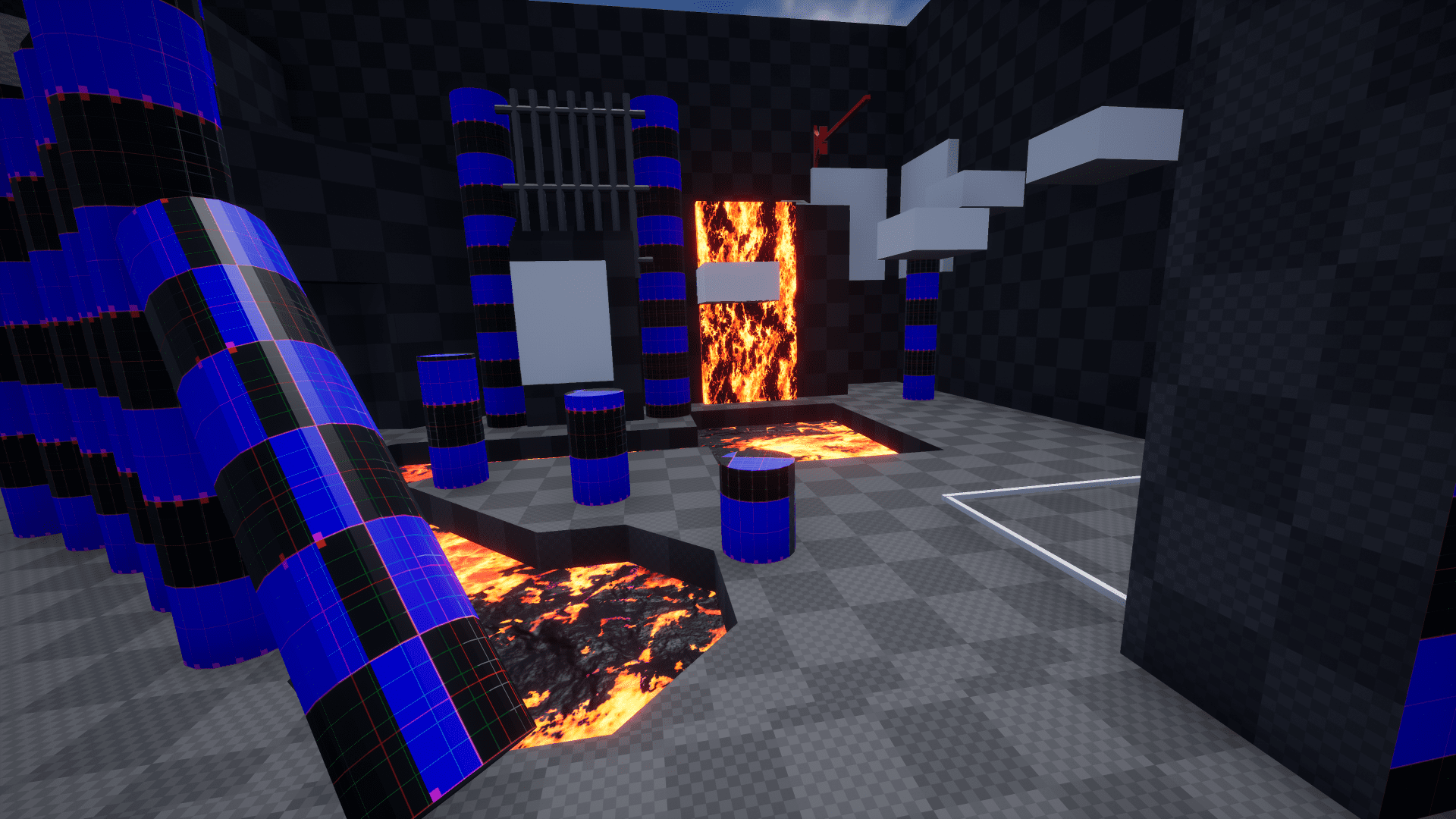
Iteration 3
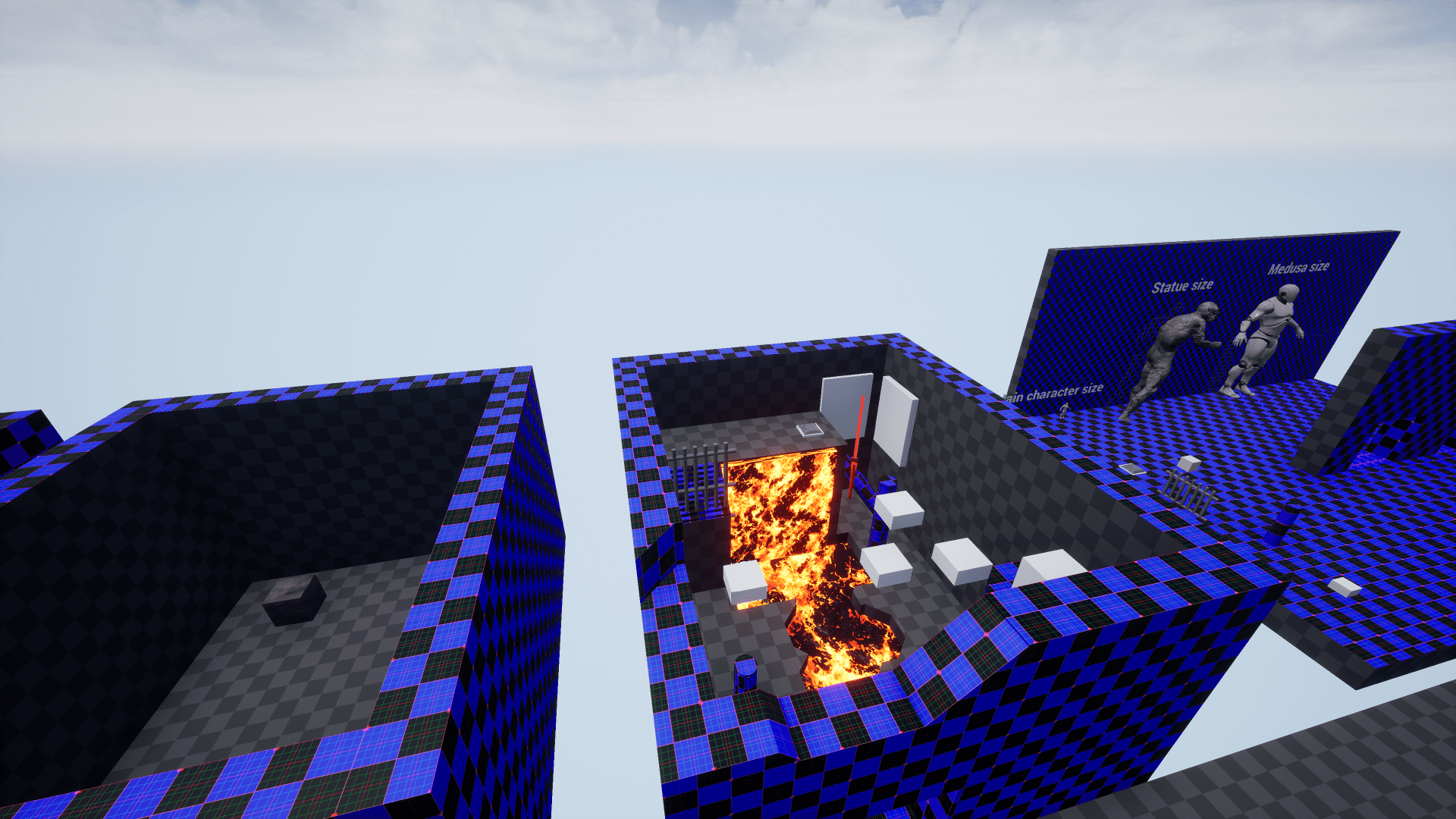
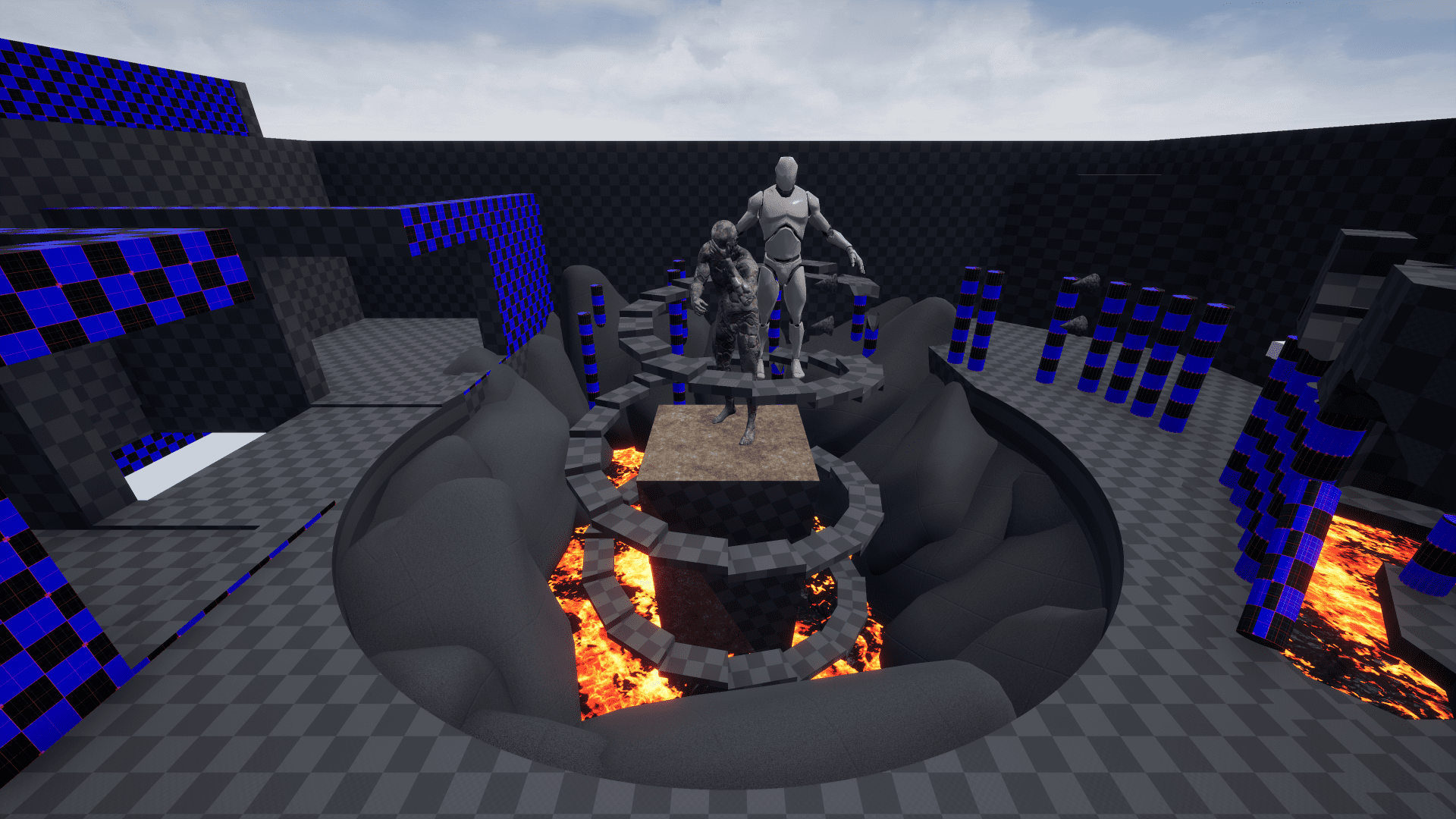
On the right here you have a couple of iteration images for different sections in the boss room. The boss room consists of 5 rooms, 4 side rooms and 1 main room in the middle.
The player has to complete puzzles to activate crystals that will hinder Medusa. Once the player has completed all 4 puzzle rooms the crystals combine their lasers to disintegrate and defeat medusa
The boss room was designed this way because there is no direct combat in the game. During that the player is completing the puzzles in the side rooms medusa moves around and tries the kill the player with her petrifying gaze every once in a while.
Iteration 6
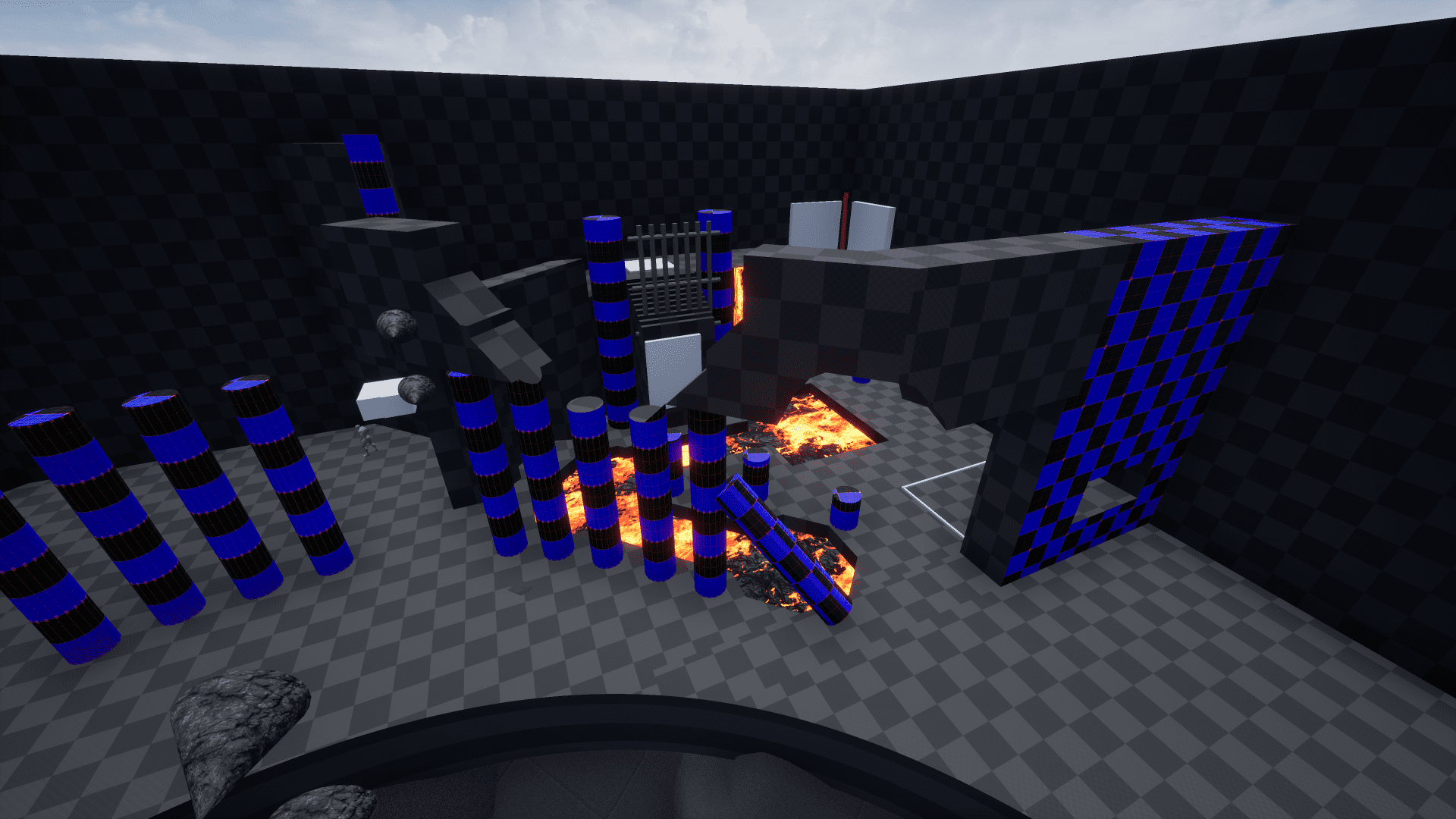
Based on feedback the level has been being iterated on. On the right and below, you see a couple more iteration images with before and afters. The main addition of this iteration is making the place come together from 4 separate rooms to 1 big room.
This change was partly made by myself as well as what other people gave as feedback. The boss room felt like it had side rooms while I wanted to make it feel more like 1 room that was broken open into smaller sections.


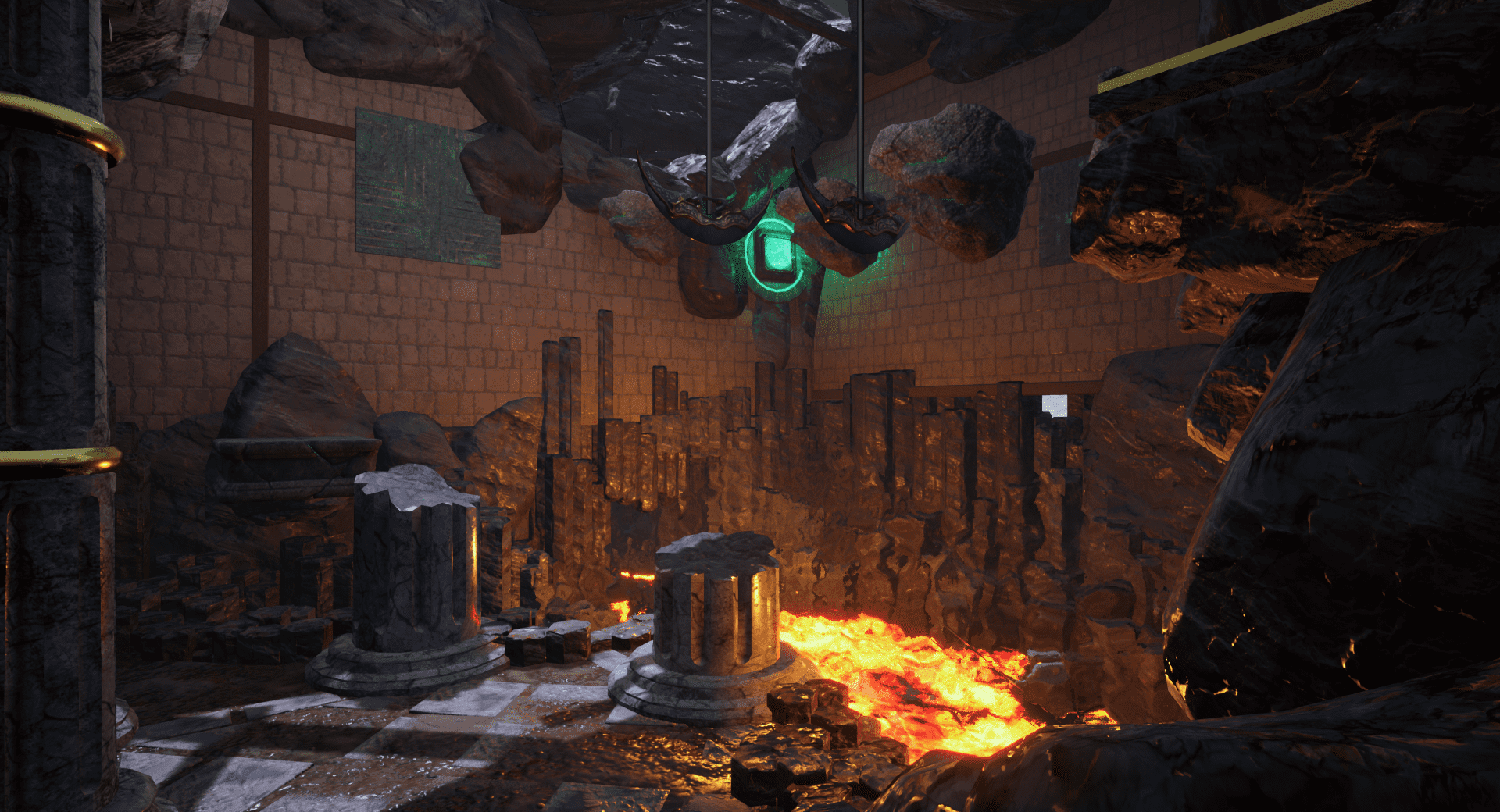

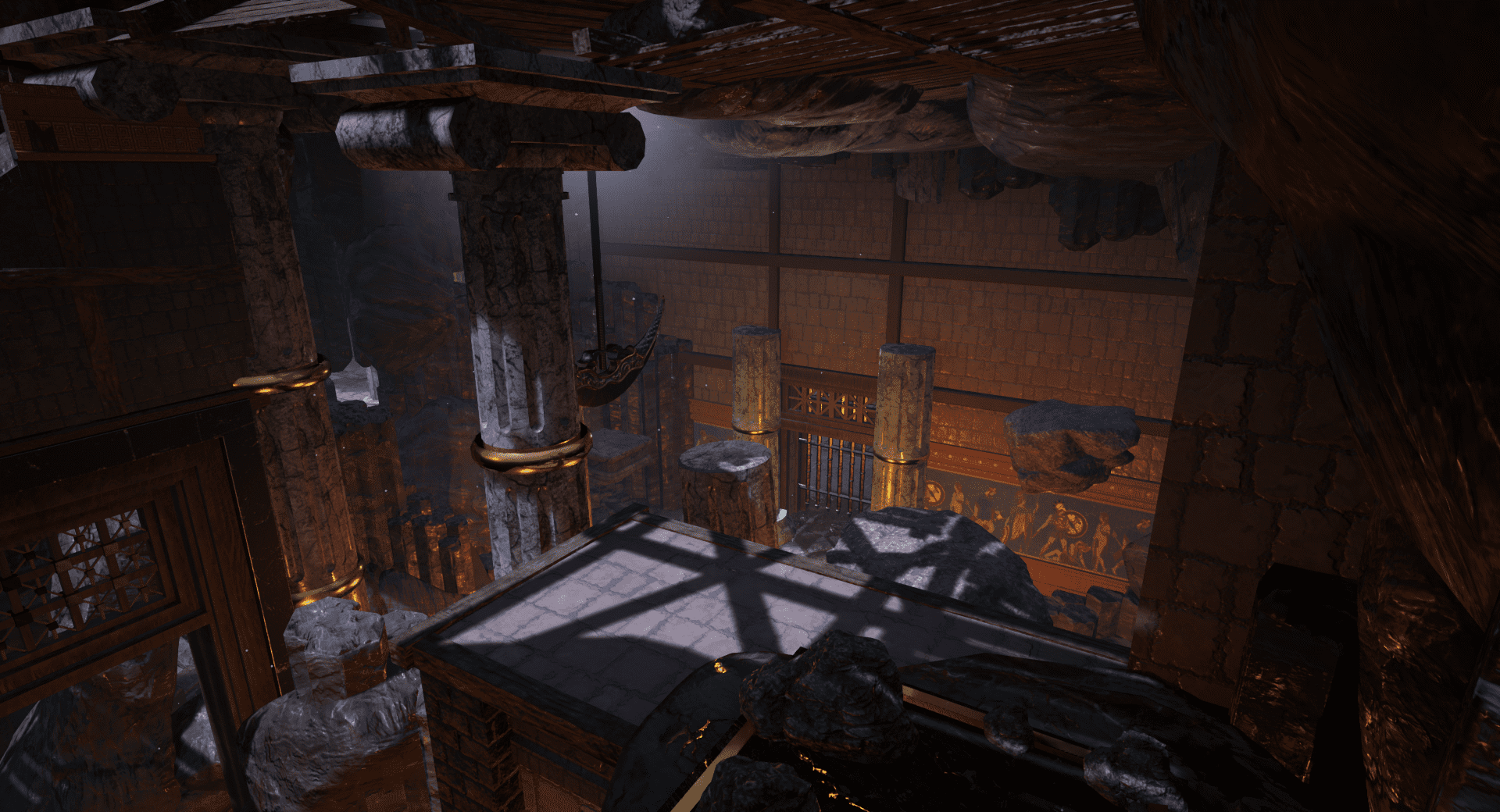

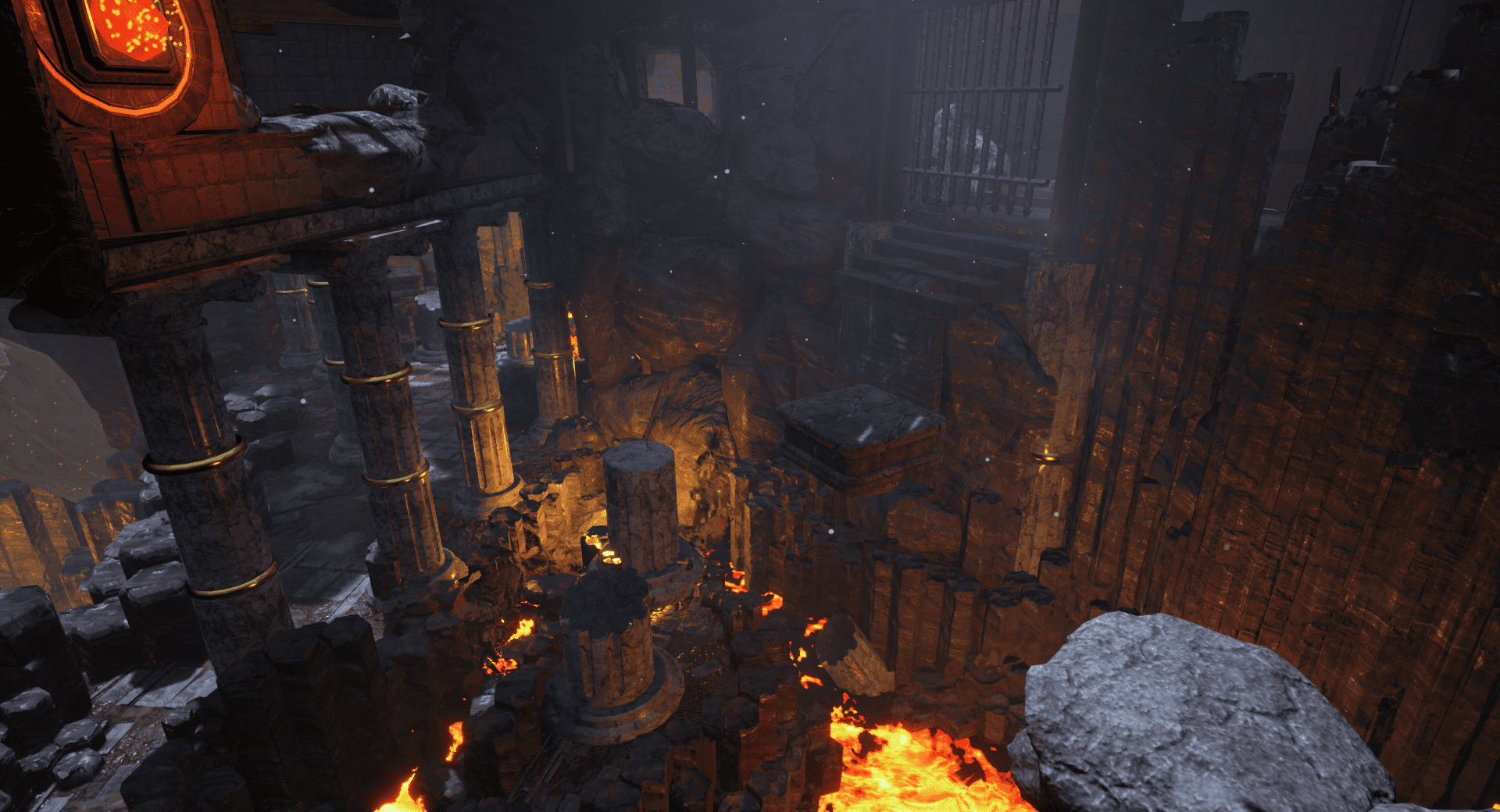
Iteration Final
After finishing up some collision checks together with an artist we took on set-dressing the level for the final stages. I did an initial pass by replacing the lockout assets like pillars with the actual meshes while the arts took on making sure the composition was still right at certain places.
During this process, the only issue I encountered was that the medusa model had shooting animations. This meant at some of the lines of sight that were previously correct were now broken. By making small adjustments of creating bigger open spaces by replacing the assets I was able to fix this issue.
Audio design
Planning, Priortization and Sourcing
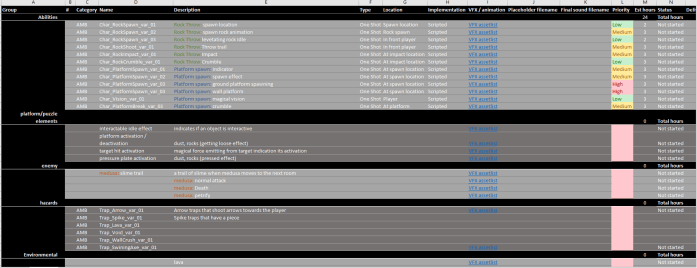
For Temple of Giants, I was responsible for both the level design of the boss room and the full audio of the game. to manage this process I had to come up with a good overview of all of the sounds that still needed work and were the most important. To do this I created the audio design document this document was extensive for all the purposes I needed.
In collaboration with the production team, I looked at all the sounds that we needed for the game to prioritize them. The idea for this was quite straightforward by having a look at what sounds are encountered first to last. By looking this way it would guarantee that the player wouldn’t miss anything.
Due to my limited time instead of creating sound effects scratch I opted by sourcing out sound effects. the main resource that I used for this was the GDC audio vaults. These vaults have been growing over the years and contain sound effects from every variety.



Editing, Implementation and Balancing
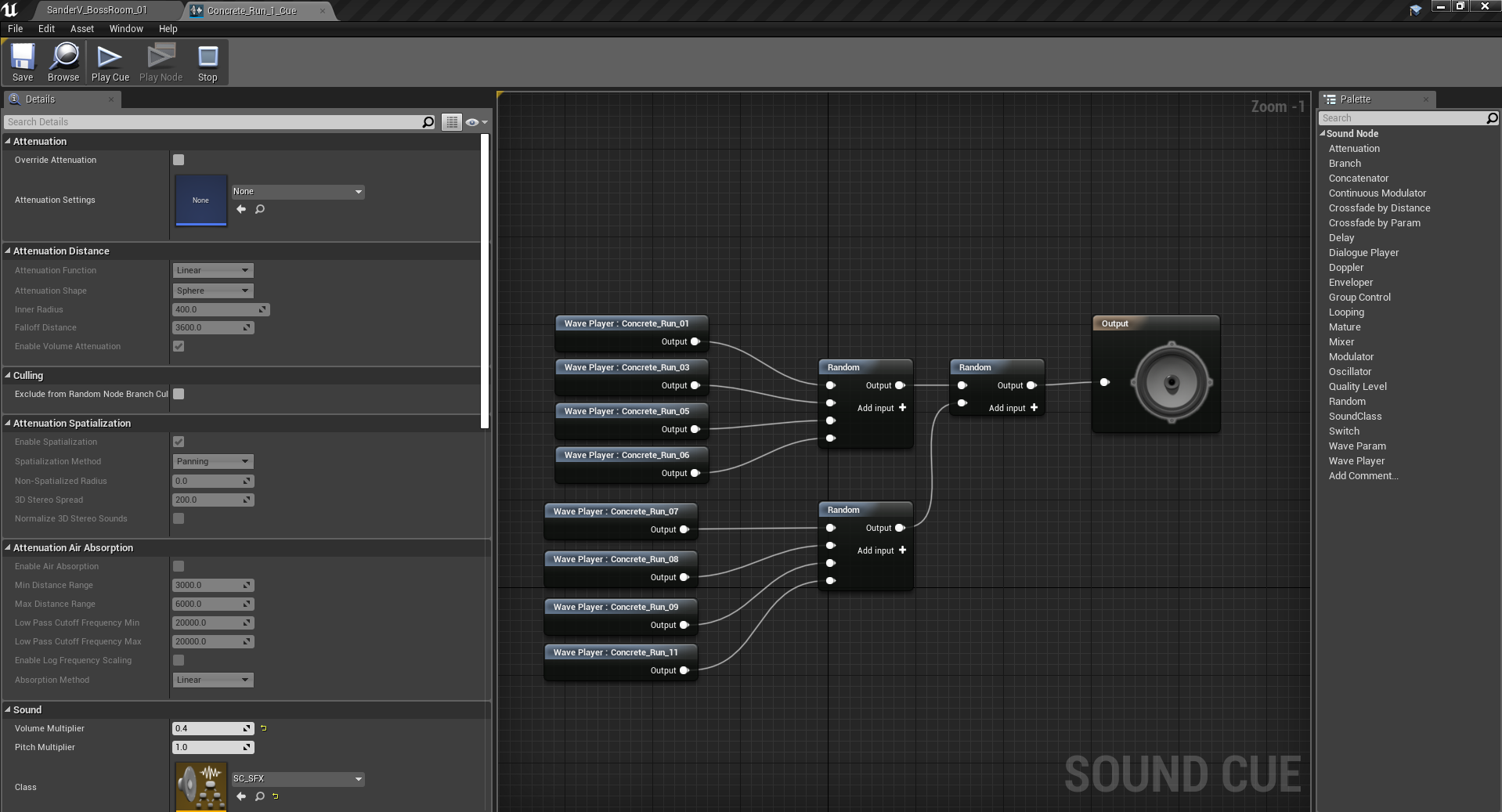
Once I would have a sound effect that closely resembles what I need. I started editing it in Audacity, in here I changed the pitch, Bmp, cut out parts, and occasionally isolated different sounds of an effect. Lastly, I also combined multiple sound effects together to create the sound I needed.
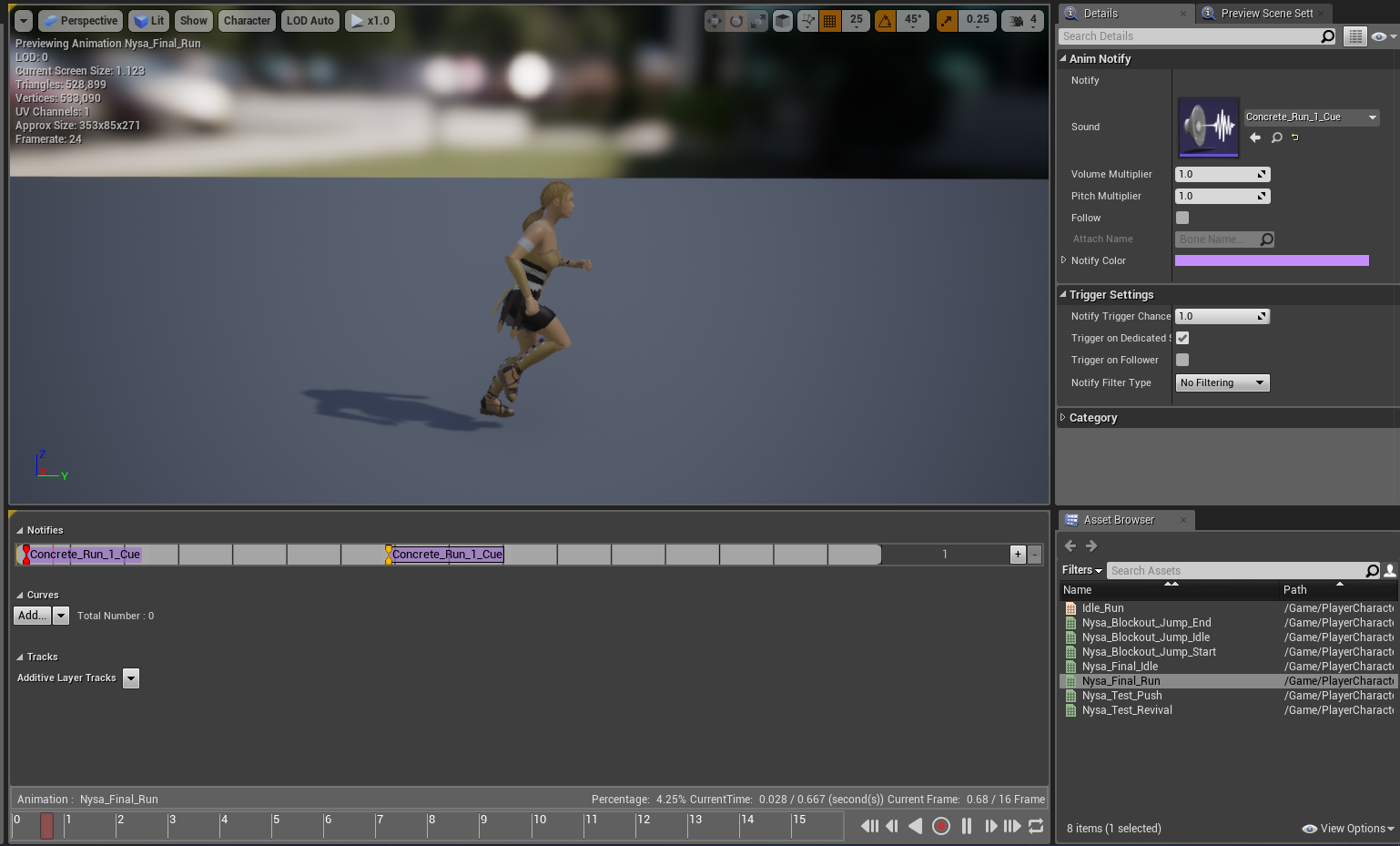
In the engine, I had created a Gym Level where I tested these sounds to see if they match with the game. I would later after some balancing, implement the sounds in the respective blueprints or even animation states.
Closing thoughts
While being part of Temple of Giants was chaotic and busy by doing both Level design and Audio design at the same time. The experience I gained from them was only positive ones it learned me to work more efficiently and smart in situations. I also learned to make hard decisions and cuts of things that would make it in or not due to it.
Overall the work together with the team was great even with the slight hiccups at the end with deadlines nearing in.