Main responsibilities
- Researching and analysing existing developed and unfinished maps
- Creation of blockouts and early set dressing
- Constructing and balancing gameplay internally & externally
- Managing internal playtesting data
- Creation of 600+ missions/challenges
- Implementation of 800+ missions/challenges
- Testing missions/challenges
GIGANTIC: RAMPAGE EDITION is a premium and definitive release of the original 5v5 MOBA Hero Shooter, GIGANTIC, that provides a dynamic and exciting team-based multiplayer experience for fans of both genres. Choose from a diverse roster of unique heroes, each with a set of upgradeable abilities, and team up with four other players to control objectives and take down the opposing team’s mighty Guardian, all while protecting your own. GIGANTIC: RAMPAGE EDITION includes a new game mode, cross platform play, new heroes, new maps, and gameplay improvements that give fans a bigger and more complete GIGANTIC experience than ever before, while welcoming new players to the action and fun-filled world of a Hero Shooter.
Gigantic Rampage edition is well received with over 100K downloads and over 3000 very positive reviews on steam
Tools used
Gigantic is an Unreal engine 3 project which has been developed by Abstaction studios where I have used the following tools.





Game design
Character design
At the start, when I joined the project I started out by getting familiar with the game by attending the collaborative meetings we had. These meetings were on the design of the 2 current still underdeveloped heroes: Kajir and Roland.
Despite having very little impact on these designs at the time, they made me aware of the heavy limitations Unreal Engine 3 has for this project. Later while the development continued we kept up with these meetings and I assisted in Concepting and Brainstorming on how to bring the features we wanted to life with the limitations we faced. (On the side see some of the character design documentation)


Feature Breakdown
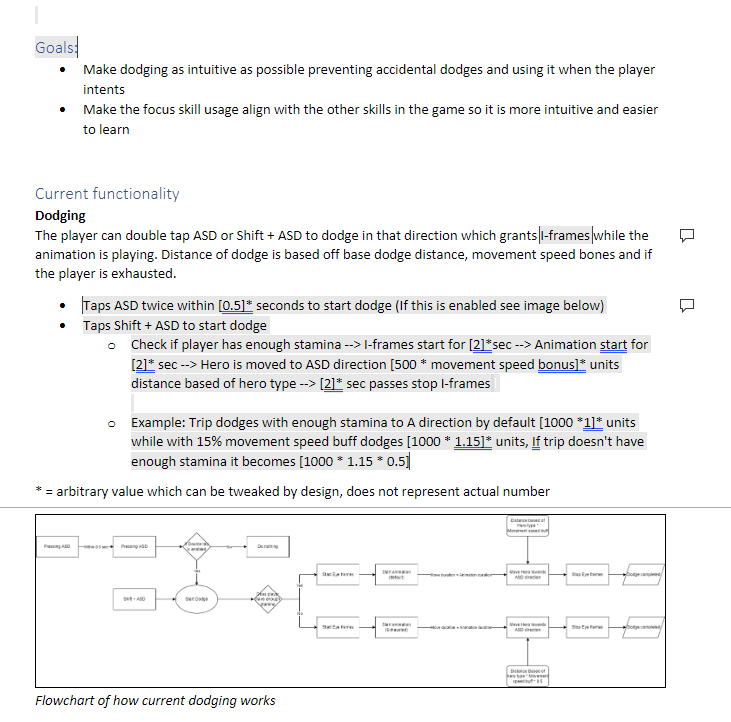
In collaboration with my design lead, I worked on reworking the existing dodge mechanic to make it feel better in play. I did this by researching and testing the current state of the mechanic. As well as researching a similar mechanic in other games in addition to looking on forums as to what the main issue is according to players. The main issue was that players would accidentally make use of the dodge while moving which costs stamina which is a resource that only replenishes out of combat.
To prevent this I redesigned how the dodge mechanic works so that it would only trigger if a player is walking in a direction or double presses in a direction. In addition, making it so certain values would be able to be changed in the settings menu so that players can have control over how much delay they want.
In collaboration with programming after some testing back and forth of the feature we decided to leave the old implementation in place while also implementing the new one with a simple If statement if the player chooses to use the Legacy of New dodge mechanic.
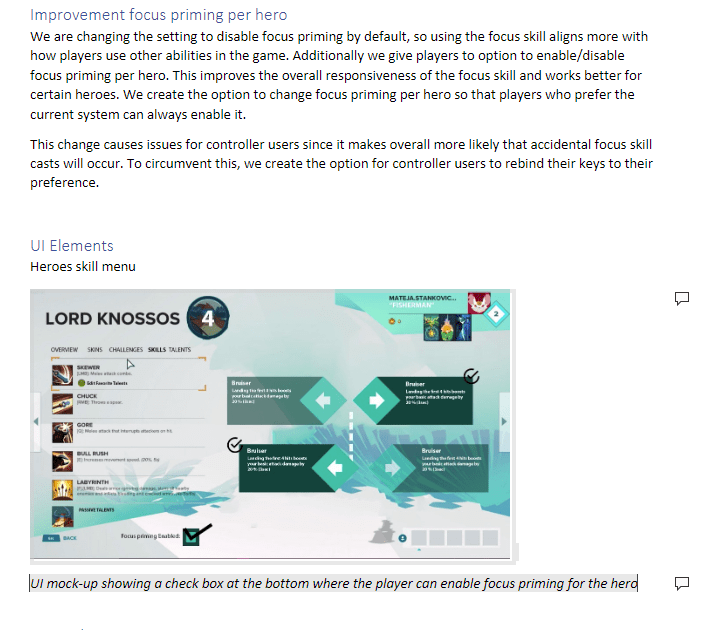
During this process, I stumbled upon an underutilized feature named focus priming it was implemented but not accessible to the players. I created a feature document with how we could similarly implement this feature like the dodge function by adding in an If statement that would override the input method for casting abilities.
(on the side you see some documentation of the feature breakdowns for both the dodge and focus priming)
Level design
Level design Research
I started the level design process by looking at several existing and used levels and ones that weren’t fully developed yet. During this, I established an LDD describing multiple things
- A Top level overview of the level
- The goals of the level in what it tries to accomplish
- e.g. High paced close quarters combat
- e.g. Unique 3 way escape routes
- Key elements / Landmarks of the map
- The theme of the level
- Some of the problems/challenges a map creates
- Overview of the map pathways
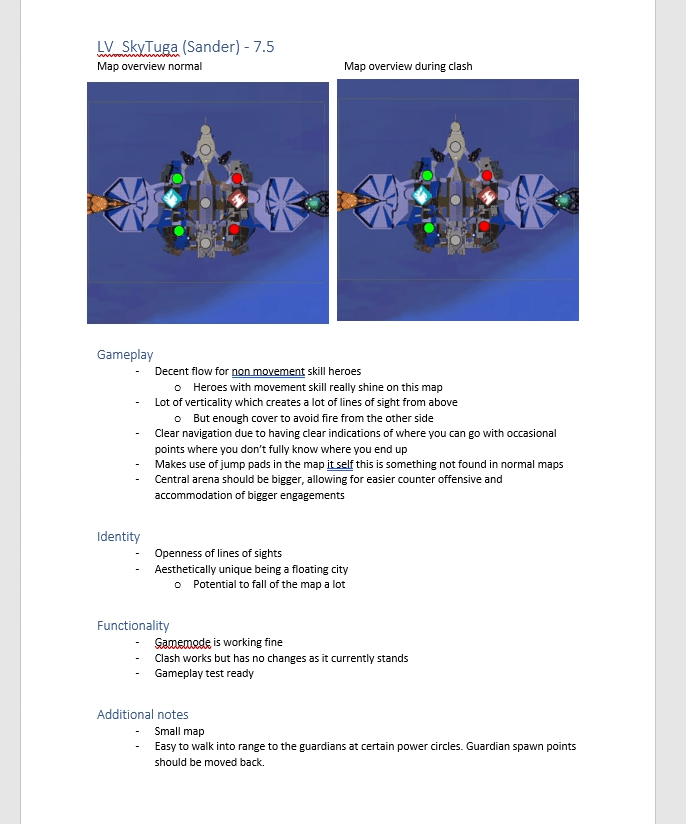
After doing this for 10+ maps I presented my results to my lead and collaboratively made a decision on which of the underdeveloped maps had the most potential to be developed into full maps. (On the side and below you see some of the parts that were part of the analysis of the maps)

Gym level
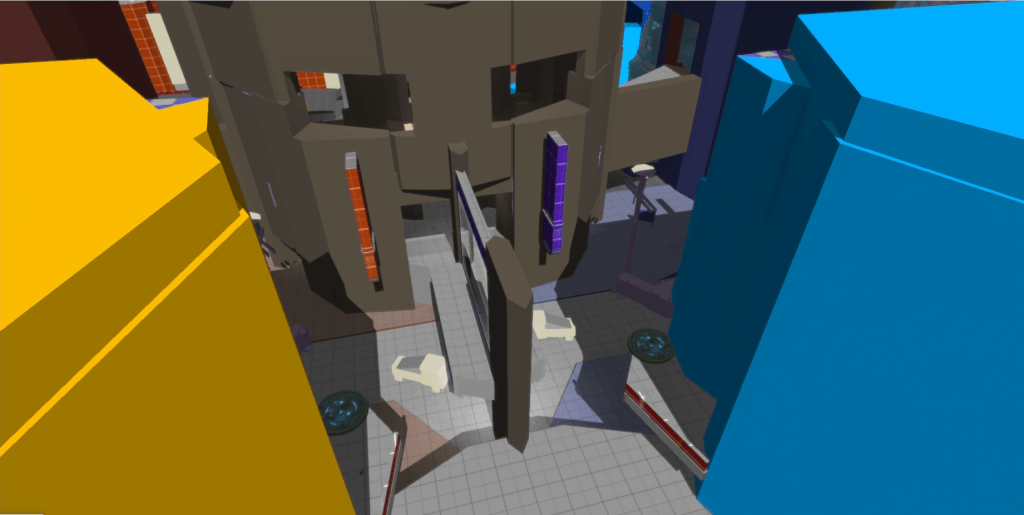
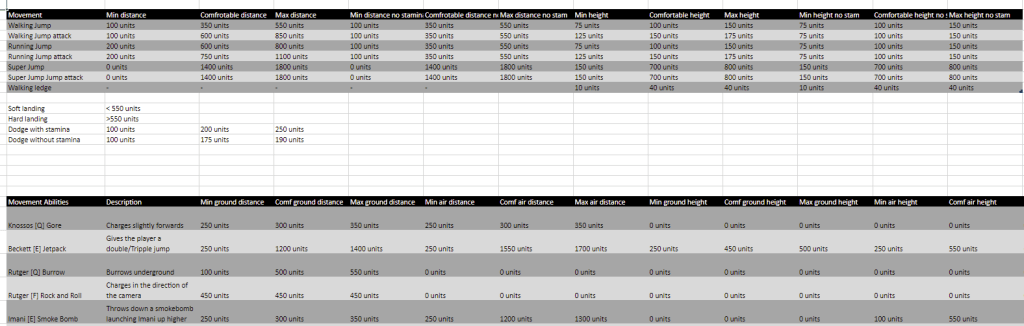
During the research part, I also established a gym-level and metrics part in the LDD document due to Motiga’s documentation that we received did not include it. So I created a very basic layout which allowed me to test out the following values:
- Walking Jumps
- Running Jumps
- Hero abilities with Jumps
- Hero abilities with Dashes
- Dodge distance
- Dodge I-frames duration
These values were most of the time split up into 3 values from min to comfortable to max, which would help us further develop the maps to make them feel good. Later during the process, this place got more tools in there like shooting ranges for abilities and AOE blast ranges as well as several new ideas that could be implemented into the maps.





Heavens Ward
During my time at Abstraction Games, I was part of the initial level design changes to Heavens ward it was a map that was already done for 70%, It even had some set dressing done. So when I started out I looked at what can be changed without changing too much of the core of the map changes during half-time.
The biggest changes I made to the map were adding elevation in the central battle area to make more use of ranged attackers. Adding additional routes to places to the meat grinders of the map and adding glass walls increased visibility and tactical approach. (On the side you see several images of the level design changes)
Playtesting data processing
Early on in the project my lead put me in charge of processing internal playtesting data so we could track each player’s skill level as well as which heroes performed well or poorly. The player skill levels were mainly used to make sure games were balanced across the board while hero data was used to restrict the play of certain heroes or playstyles.
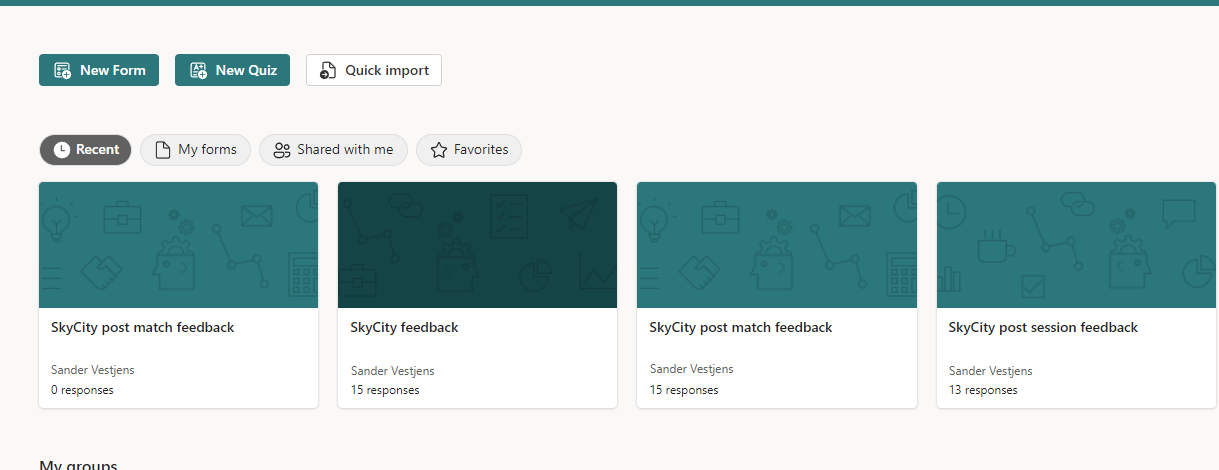
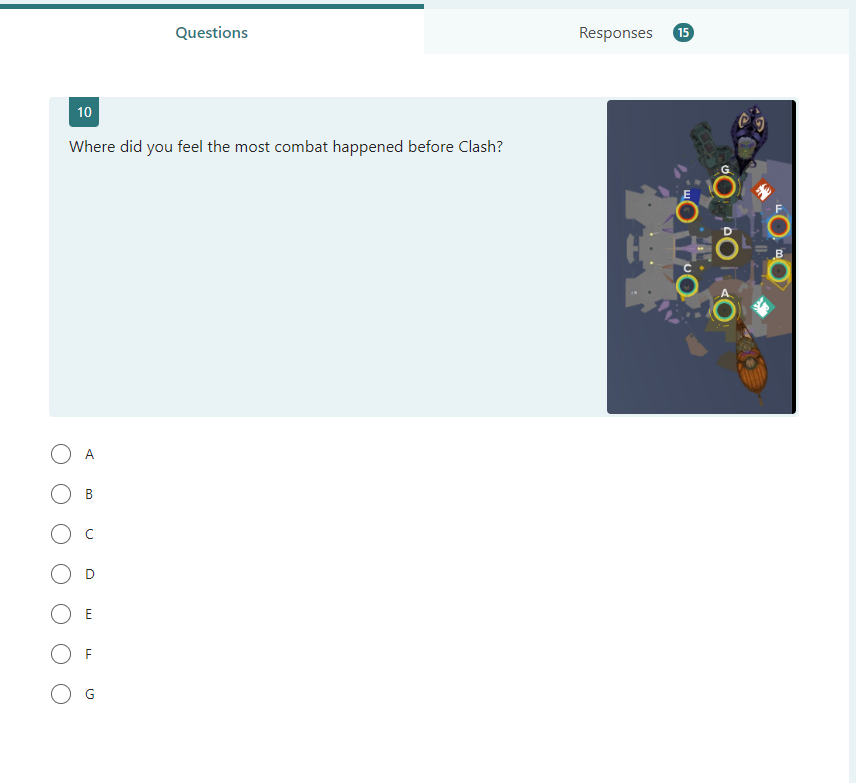
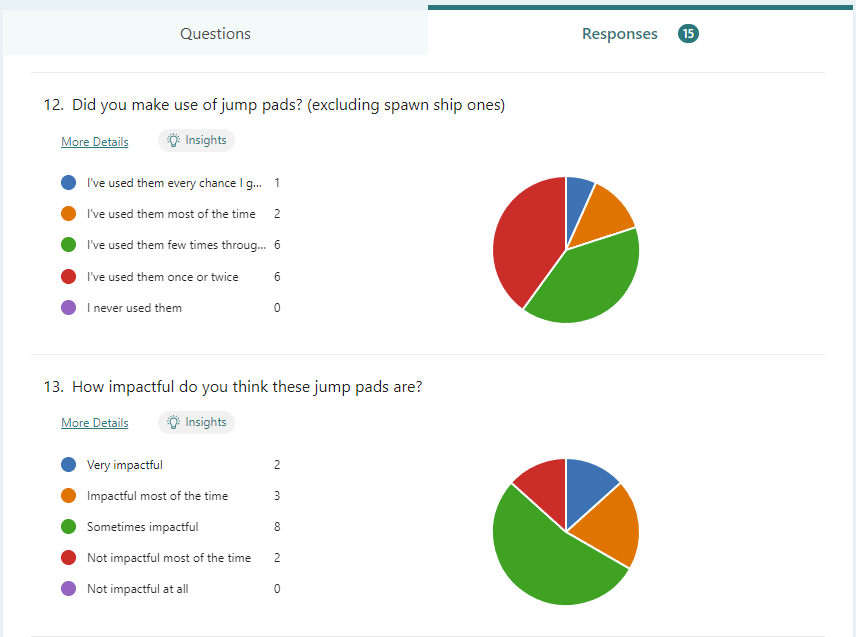
Later during the level design of Heavens ward (formally known as Skycity) I also recorded playtesting data and processed it to use for similar reasons as for the overall playtesting restrictions. The way I collected data was done in 2 different ways
- Direct gameplay statistics
- Feedback surveys
(On the side, you see some direct gameplay statistics and how they are processed while below you see some of the feedback surveys)
Mission design
Mission designing
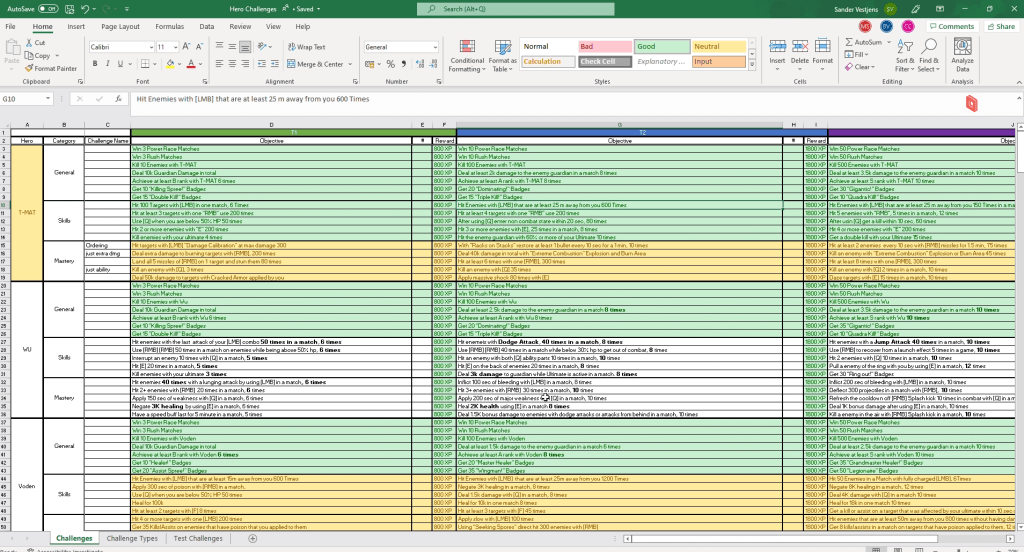
As part of the rebirth of Gigantic, we planned to add missions and challenges players could do to gain new cosmetics. In a collaborative meeting with the design team, we decided to split the challenges up into categories:
- Easy
- Medium
- Expert
The easy missions are close to global ones where you need to win a match with a specific hero or get a certain amount of kills. The medium missions are challenges that mainly focus on killing enemies with specific abilities alone or under certain conditions. While expect challenges were designed to be the peak of player skill which often included doing certain combos or having a strict time frame. These missions all had 3 progression stages making it so that many challenges would progress harder along the way showcasing that you are getting more experienced with a hero
Myself and 1 other designer worked on creating all these challenges and we both created over 600+ challenges.
(Below here you see an overview of some of the challenges while on the side you see the final result )


Mission Implementation
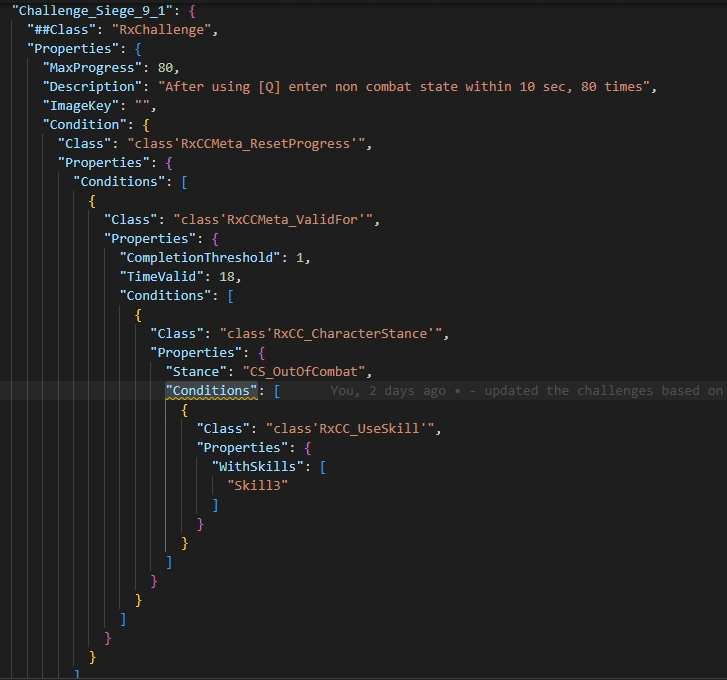
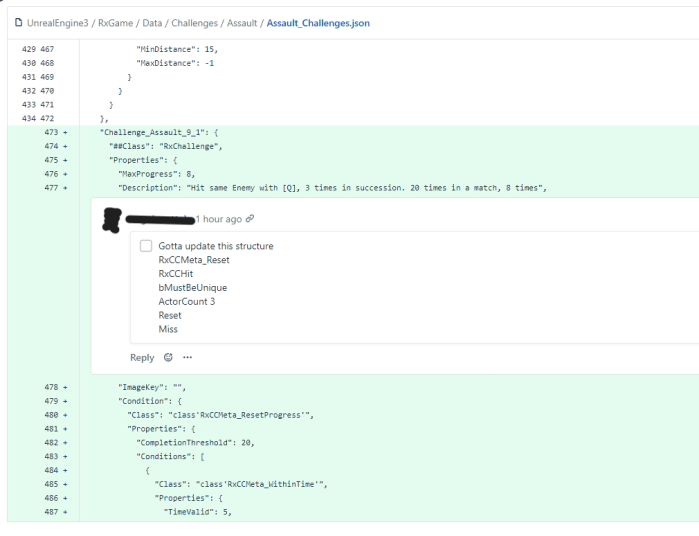
As part of creating the missions, there is also the implementation that needs to be done. After having a meeting with the programming they pointed out that they did not have the time capacity to implement it. So I suggested if we can get a template or framework to work with we designers would be able to implement them while programming and then only have to code check to see if it is up to standard.
So with the help of JSON templates, I went through the process of implementing over 800 challenges and testing them along the way.
(On the side you see how the challenges were implemented and tested while below you see how they got code reviewed by programming)
Closing thoughts
By being part of the project Gigantic I have been able to learn a lot in many different subjects. One of the biggest things I learned is how important documentation is especially seeing after Abstraction was asked to revitalize Gigantic but was given very minimal documentation to work with. This led to a lot of reverse engineering and establishing new documentation that took a lot of extra time. I also enjoyed working a whole lot on the missions at this scale for the first time and how nice it can be to have a work buddy that is on the same wavelength.
Overall my stay at Abstraction Games was a pleasure the people and work environment are great and I’m grateful that they were willing to have me and set me off onto new adventures.